Sliding Gate Installation
Sliding Gate Installation. See span limits and install steps. Get instant pricing in the configurator.
Richard Ryan
Founder of GateFrames. Helping homeowners choose the right driveway gate for their property.
Methodology note: cost guidance uses material, operator, and labor inputs with city-level adjustments. Always verify permits, utility clearances, and site constraints locally before installation.
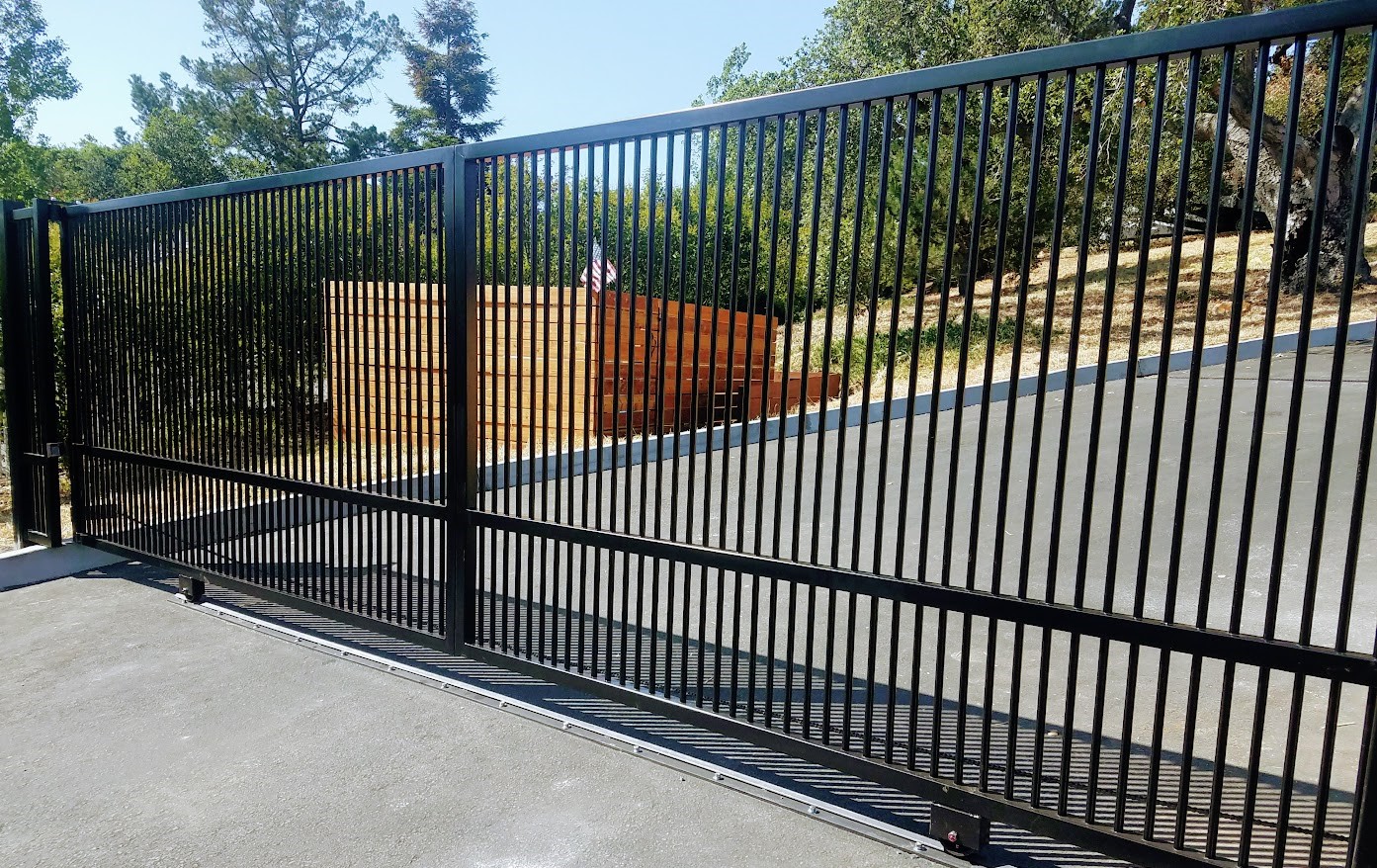
Sliding Driveway Gate Installation
Compare costs and what you need for sliding gates. Prices are for 2026 and vary by area.
For more detail, see Installation Guide and Sliding Automation.
Quick Summary
In this guide:
- Step-by-step installation checklist
- Timeline and permit info
- Specifications and comparison
- Installer tips and next steps
Your Sliding Installation Checklist - Step by Step
Two people. A few hours. Our step-by-step process. Steel and wood - no crane needed. You can do this.
Step 1: Measure where the gate will go
Measure twice. Write it down.
- When measuring, allow for double the distance of the gate size + 2.5' for automated gates (Example: 16' sliding gate, allotted area 34.5')
- Mark the location where the posts will be installed with white paint
- ⚠️ Call 811 to have underground utilities located before you dig
Step 2: Dig the post holes
- Once the area has been cleared and there are no obstructions, dig the post holes
- We recommend an 18" x 18" x 36" hole for each post (depth can vary depending on how solid the ground is)
- Use crushed base rock at the bottom of the hole for extra help with drainage and support for posts
Step 3: Find the absolute highest elevation in the gate's path
- Use a tape measure and a level to determine where the highest elevation is in the path of the gate
- Once the highest point along the path of the gate has been found, set the posts to that height and level across to the next post. Height of posts from highest elevation point provides a minimum of 2" clearance above the gate
- Top of post 74" plus highest elevation point for Flat Top Gates (the posts might be higher than this depending on the elevation point)
Step 4: Attach "V" track
- The "V" track should be set behind the support posts 5" away to the center of track for non-wood gates, and 6" away to center of track for wood gates
- The track can be set using Blue concrete screws, expansion bolts, sleeve anchors or epoxy with threaded rod (the type of anchoring is dependent on your ground material)
Step 5: Attach overhead roller supports
- Clamp overhead roller supports to the top of the post roughly 1" down from the top (to accommodate the post cap)
- Drill (2) ⅜" holes and bolt on the support with provided bolts
Step 6: Set gate
- We recommend using 2 or more people to set the gate
- Attach wheels to the wheel housings
- Align the gate so that the wheels ride on the V track
- Slide the gate into the overhead roller supports
- Use a level to make sure the gate is level then tighten down the roller supports
Step 7: Gate stops
- Roll the gate to the complete open position (so that the end of the gate is flush with the inside of the support post)
- Attach the "V" track stop so that the gate cannot slide past the maximum open position using provided self-tapping screws
- Roll the gate to the close position (so that the gate ends are flush with the outsides of both posts)
- Attach the close position stop using the provided stop to the bottom of the open side of the gate
For more detail, see Sliding Cost and Sliding Maintenance.
From Order to Operating: Your Steel Sliding Gate Timeline
Most projects take 6–14 weeks. Here's what happens when.
| Phase | Duration | Details |
|---|---|---|
| Permit approval | 1-3 weeks | Submit drawings + operator specs to building department |
| Fabrication | 3-4 weeks | Custom fabrication after design approval |
| Shipping | 3-7 days | LTL freight; lift-gate trucks available for easy curbside unloading; kits can be unloaded piece by piece on the truck for lighter handling |
| Site preparation | 1-2 days | Excavation, concrete footings, utility trenching |
| Installation | 2-3 days | Gate hanging, operator mounting, electrical, commissioning |
Total project timeline: Typically 6–14 weeks from initial consultation to operating gate, depending on permit speed and fabrication complexity.
For more detail, see Sliding Safety.
Do You Need a Permit?
Permits are a pain. But skip them and you risk fines, removal, or voided insurance. Short answer: almost always yes. Automatic gates and most gates over 6 ft need a permit.
⚠️ Why it matters:
- Insurance: Claims can be denied for unpermitted gates
- Selling: You must disclose. Buyer may make you remove it
- Safety: Permits check that your gate meets safety rules
Typical rules:
- Height limit (6-8 ft in most areas)
- Distance from property line (varies)
- Electrical permit for the opener
- Emergency access (fire dept may need a key)
Specs That Matter: Sliding
Sliding Gate At a Glance
| Min width | 10 ft |
| Max width | 40 ft |
| Space needed | Space beside fence for gate to slide - same as gate width |
| Best for | Flat or gentle slopes, Wide openings |
| Opener type | Chain or gear drive |
Sliding gates slide sideways. No swing space needed. Perfect when you're short on room.
Sliding Gate: What to Know
Best for: Wide openings. Over 16 ft. No room for swing? Sliding works. Handles 20-40 ft easily. Good on gentle slopes.
⚠️ Watch out: Forgetting where the gate goes. It needs a clear path beside the fence. Same length as the gate. A wall or planter 10 ft away? A 16-ft sliding gate will not fit.
💡 Pro tip: Better track and rollers cost $200-$400 more. But they are quieter. Neighbors will thank you at 6 a.m.
Gate Type Comparison
Each gate type has trade-offs. Space, slope, and width requirements determine the best fit.
| Factor | Swing | Sliding | Cantilever | Bi-fold |
|---|---|---|---|---|
| Space needed | Full arc radius | Side track run | 1.5× width lateral | Minimal |
| Max width | 20 ft | 40 ft | 60 ft | 30 ft |
| Slope tolerance | Poor | Fair | Excellent | Poor |
| Typical speed | 12-18 sec | 8-14 sec | 8-14 sec | 6-10 sec |
| Maintenance | Low | Medium | Low-Medium | Medium |
What Installers Wish You Knew (Before You Sign)
Methodology note: These tips come from common real-world install patterns. Always double-check local code, utility clearances, and your driveway layout before you start.
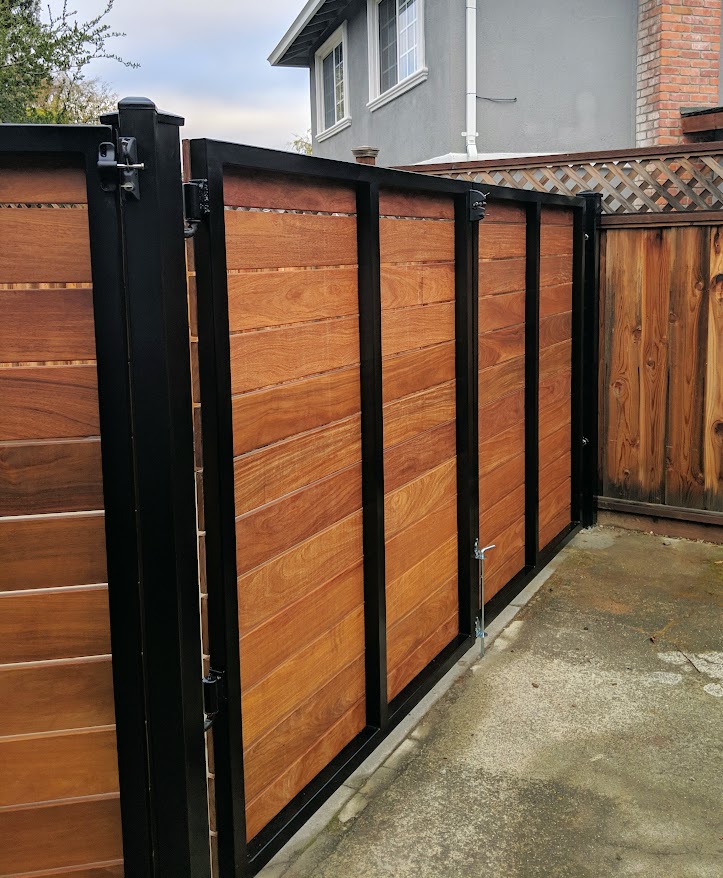
💡 Sliding Gate (Wood)
The part that rides in the track must be steel. Not wood. Wood warps. The gate will jump the track. Steel rail + wood panels = works.
Sliding Gate Pro Tips
⚠️ Watch out: Forgetting where the gate goes. It needs a clear path beside the fence. Same length as the gate. A wall or planter 10 ft away? A 16-ft sliding gate will not fit.
💡 Pro tip: Better track and rollers cost $200-$400 more. But they are quieter. Neighbors will thank you at 6 a.m.
Real-World Project Insights
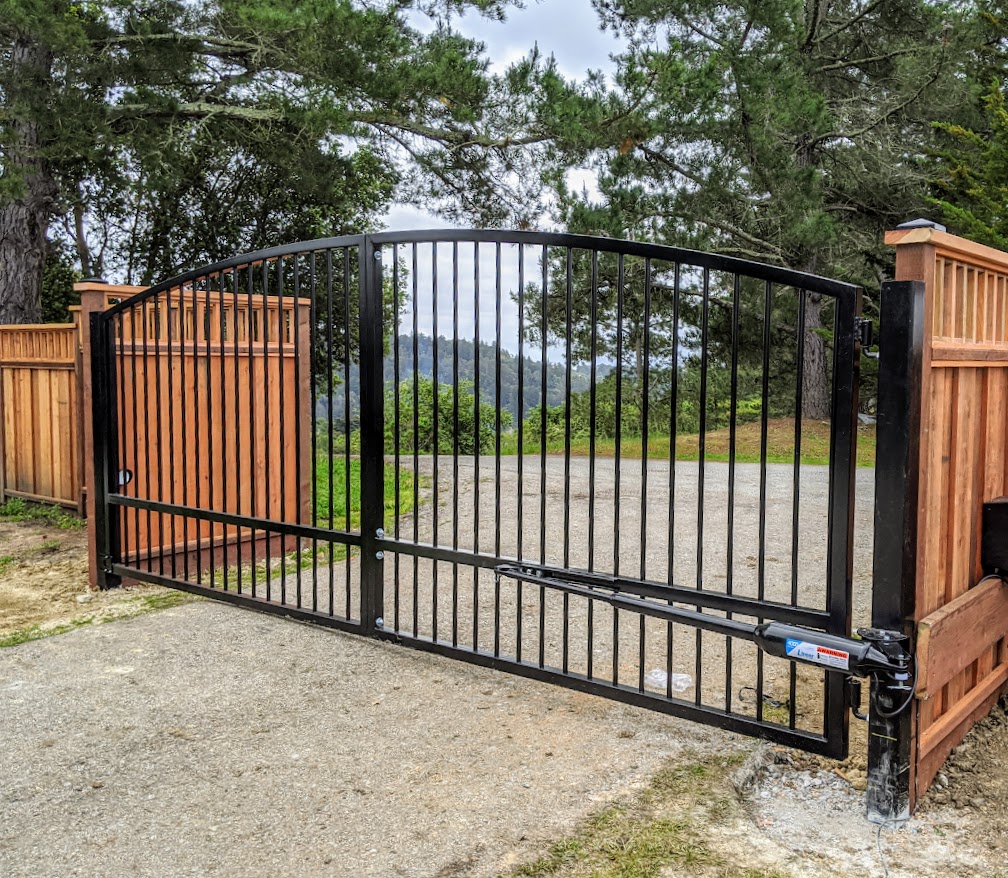
GateFrames has shipped driveway gates to every state. We've even installed train gates at the Maui airport - from residential driveways to commercial projects.
Every project starts the same: you want a gate. Your driveway has limits. Match the right gate to your property.
What makes a project go well:
- Measure the site. Do not guess.
- Posts sized for your soil
- Opener sized for your gate weight
- Expect 6-14 weeks. That is normal.
Fun Fact
In freeze-thaw zones, water expands 9% when it turns to ice. That's why footings crack - and why depth matters.
Recommended Products
Based on this guide, review the most relevant next steps:
See configuration pricing when you're ready to validate dimensions and lead time.
Why GateFrames?
- Nationwide fulfillment process - Projects are delivered across the U.S. with handling options suited to residential sites.
- Instant custom pricing - You can price your gate online right away instead of waiting for a quote.
- 3D model matches your options - You can see your selected setup before buying.
- Install method designed for clarity - Two-person installation path with documented sequencing and support.
- Durable material system - Steel and wood configurations built for long service life with practical maintenance expectations.
- Scope control for custom projects - Complex requests can be quoted with explicit build requirements.
- Support during planning and install - Direct access to help when validating dimensions, hardware, and setup decisions.
- Evidence-led guidance - This blog maps pricing, permitting signals, and installation constraints so buyers can make defensible decisions.
Frequently Asked Questions
What space does a sliding gate need? Space beside fence for gate to slide - same as gate width. Measure before you buy.
What's the biggest mistake with sliding gates? Forgetting where the gate goes. It needs a clear path beside the fence.
Do I need a permit for a driveway gate? Most cities require one. Annoying? Yes. Skippable? No. Check with your local building department.
Can I install a gate myself? Manual gates on flat driveways - yes. Automatic gates need wiring. Usually an electrician and permit. Pro install makes sure it meets safety rules.
Get a Gate Scope You Can Actually Execute
Use this guide to shortlist the right configuration, then price it with real dimensions. GateFrames helps you move from research to purchase without guesswork.
- Configured for real driveways - Select gate style, dimensions, and hardware to match your site constraints.
- Instant pricing on custom gates - Most competitors make you click “request a quote.” We show live pricing in our store.
- Live 3D matching model - As you change options, the model updates so you can see what you are buying.
- Nationwide shipping workflow - Delivery options are designed for residential handling, including lift-gate support where available.
- Install clarity before checkout - Step-by-step install sequence and support reduce scope risk for DIY or contractor-led installs.
- Custom request path - If your project goes beyond the configurator, submit requirements in cart and we quote the custom build scope.
Ready to check your exact price now? Open the configurator at GateFrames.com.